Estonia’s Digital Vision: From 1994 to Today
November 4, 2026Estonian Road to the Information Society (1994): The Vision Behind Estonia's Digital Transformation.
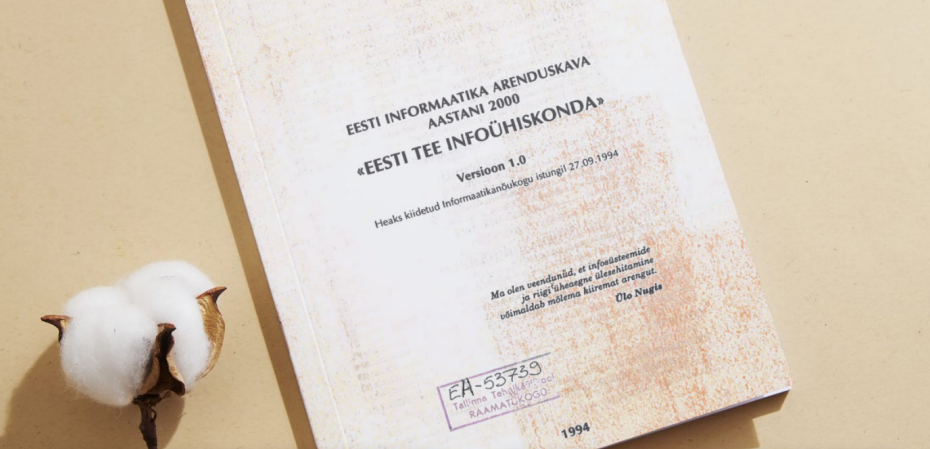
In 1994, Estonia set out an ambitious vision for becoming an information society. Thirty-two years later, the Estonian Association of Information Technology and Telecommunications (ITL), together with Nortal and Datel, has made this historic development plan available in English, both to recognize the pioneers of Estonia’s digital transformation and to share lessons that remain relevant today.
Read the English translation of Estonian Road to the Information Society (1994):


A vision developed at a defining moment
In 1994, Estonia was still rebuilding its institutions and economy following the restoration of independence. Resources were limited, but there was a clear understanding that information technology could play a fundamental role in the country’s future.
The development plan, Estonian Road to the Information Society, was prepared by the Estonian Informatics Council in 1994. Its principal author was Ustus Agur, with contributions from other members of the Council and experts involved in shaping Estonia’s early information technology policy. The document outlined a vision that extended far beyond introducing computers into public administration. It considered information infrastructure, public registers, telecommunications, education, research, legislation, economic competitiveness and the preservation of Estonian language and culture as interconnected parts of national development.
One of its central ideas was that Estonia should not wait until it became wealthier to invest in information infrastructure. Such investment was itself a prerequisite for economic development, more effective government and stronger international competitiveness.
Why does the document still matter?
Estonia is internationally recognised as a digital society, but its success did not begin with the technologies and services that later became widely known. It was preceded by years of research, planning, institution-building and cooperation between the public sector, technology companies and the academic community.
By translating and republishing the 1994 development plan, we want to make this part of Estonia’s digital history more accessible to an international audience. The publication is also an acknowledgement of the people whose expertise, determination and long-term thinking helped establish the foundations of digital Estonia.
Although many of the technologies described in the development plan belong to another era, several of its underlying principles remain highly relevant. Strong digital foundations come first. The plan emphasised reliable public registers, common standards and interoperable information systems. These remain essential for effective digital public services and are increasingly important as governments seek to adopt artificial intelligence.
Technology and governance must develop together. The document recognised the importance of legislation, data protection, information security and institutional coordination alongside technological development. The same need to balance innovation, regulation and public trust is central to the AI era.
Long-term investment requires the courage to act early. Estonia’s experience illustrates why smaller countries must make strategic choices even when resources are limited and technological developments remain uncertain. Building shared digital infrastructure can reduce duplication, improve efficiency and create opportunities for economic growth.
The 1994 plan also reminds us that digital transformation is not simply a technological project. It requires cooperation, skills, leadership and a shared understanding of the public value technology should create. At a time when artificial intelligence is creating new opportunities and challenges for governments and businesses, revisiting this document is a reminder that successful technological transformation depends on more than technology alone. It depends on the ability to recognize change, build strong foundations and work towards a long-term vision.
English translation published in 2026 by the Estonian Association of Information Technology and Telecommunications (ITL), in cooperation with Nortal and Datel.